
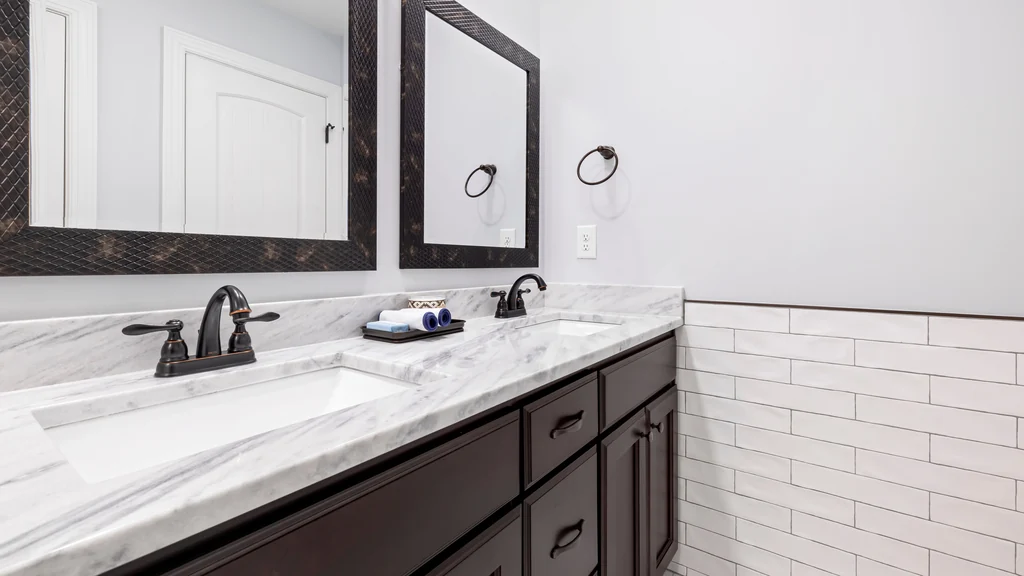
Searching for bathroom countertops near me usually means one of two things: you're standing in a half-finished vanity remodel trying to figure out what material actually makes sense for a small, wet space, or you're comparison-shopping local fabricators before committing to a quote. Either way, bathroom countertops are a different animal from kitchen countertops, and treating them the same way can waste money on durability you don't need or leave you with a surface that stains from hairspray and toothpaste within a year.
This guide breaks down the materials, costs, and local San Diego considerations that actually matter when you're replacing a vanity top, so you can walk into a fabricator's showroom already knowing what questions to ask.
Why Bathroom Countertops Are a Different Decision Than Kitchen Countertops
Kitchen countertops get evaluated primarily for heat resistance and knife durability. Bathroom countertops face a different set of daily abuses: standing water around sink basins, acidic cosmetics and cleaning products, hairspray overspray, and much smaller, more irregular cut shapes (vanity tops often have faucet holes, integrated sinks, and tight radius corners). Because bathroom vanities are usually smaller than kitchen runs, a bathroom remodel is also one of the more affordable ways to upgrade to a premium material like quartz or quartzite without the total project cost of a full kitchen.
Sizing Considerations for Vanities
Most single-sink vanities run 22-25 inches deep and 3-6 feet wide, well under the roughly 9-10 foot maximum slab length fabricators typically work with, which means seams are rarely necessary on a standard bathroom vanity the way they often are on a large kitchen island. That's one advantage bathroom projects have: a single, seamless slab is realistic even on a modest budget.
Material Options for Bathroom Countertops
Quartz (Engineered Stone)
Quartz is the most popular choice for bathroom vanities in San Diego, and for good reason. It's resin-bound and non-porous, so it never needs sealing, resists staining from makeup and hair products, and offers the most consistent pattern and color matching of any stone option. Quartz typically runs $50-$120 per square foot installed.
Key fact: Quartz (engineered stone) is resin-bound and non-porous, never needs sealing, and offers the most consistent pattern and color of any surface material, with a Mohs hardness of roughly 7.
Granite
Granite is a durable, naturally heat-resistant option with unique veining in every slab, but it is porous and typically needs resealing roughly every 1-2 years to stay stain-resistant, something worth factoring in for a bathroom that sees daily cosmetic product use. Granite runs $40-$100 per square foot installed.
Marble
Marble delivers the classic, high-end look many homeowners want for a primary bathroom, but it's soft (Mohs 3-4) and porous, and it etches from acidic products, including some skincare items, even when properly sealed. It needs more frequent resealing than granite. Marble typically costs $60-$150 per square foot installed, making it a splurge choice best suited to lower-traffic powder rooms or primary suites rather than a busy family bathroom.
Quartzite
Quartzite is frequently confused with engineered quartz, but it's an entirely different, natural stone material. It's very hard (Mohs 7) and heat resistant, but unlike engineered quartz, it IS porous and does require sealing, similar to granite. Quartzite runs $70-$150 per square foot installed.
Pro tip: Never let a fabricator or salesperson use quartz and quartzite interchangeably; they're chemically and structurally different materials with different maintenance needs. If a quote doesn't specify which one you're getting, ask directly before signing.
Porcelain Slab
A newer category gaining traction locally, porcelain slab is extremely hard, UV resistant, and heat resistant, and its thin profile (typically 12-13mm) makes it a strong option for wall-mounted or floating vanity designs. Installed cost runs $60-$120 per square foot.
Laminate
For rental properties, secondary bathrooms, or tight budgets, laminate remains the most budget-friendly option at roughly $20-$50 per square foot installed. It isn't heat or scratch resistant and can't be repaired or refinished once damaged, so it's best reserved for lower-use spaces.
Edge Profiles and Design Details for Small Vanities
Because bathroom countertops are smaller, edge detail has an outsized visual impact relative to a kitchen island. The most requested profiles are eased, bullnose, and ogee edges, with mitered waterfall edges (where the slab wraps down the side to the floor) increasingly popular on floating vanity designs for a dramatic, furniture-like look. Standard slab thickness options are 2cm (requiring a plywood substrate and edge buildup to look thicker) or 3cm, which is self-supporting and the most common choice for US residential vanities.
Fabrication and Installation Timeline
Templating for a bathroom vanity, like any countertop project, happens after cabinets are installed, using a laser or digital template to capture the exact cutouts needed for sinks and faucets. Typical fabrication-to-install turnaround is 1-3 weeks, so plan your bathroom remodel timeline accordingly, especially if you're coordinating around a plumber for sink and faucet installation.
Key fact: Templating happens after cabinets are installed using a laser or digital template, and typical fabrication-to-install turnaround runs 1-3 weeks depending on the fabricator's backlog and material availability.
Finding a Local San Diego Countertop Fabricator
When you search for bathroom countertops near you in San Diego, you'll get a mix of full-service kitchen and bath remodelers, dedicated stone fabricators, and big-box retailers that outsource fabrication. A few things worth checking before you commit:
- Ask to see the actual slab in person, or at minimum a large physical sample, before ordering, since natural stone veining and engineered quartz batch color can vary noticeably from small showroom chips.
- Confirm whether the quote includes templating, fabrication, edge work, sink cutout, and installation, or whether any of those are billed separately.
- For outdoor or covered patio bathrooms, note that quartz's resin binder can UV-fade or discolor outdoors over time here in San Diego's sun; granite, quartzite, and porcelain slab are the more climate-appropriate choices for any exterior vanity or pool bathroom application.
- Ask about warranty coverage on both material and installation labor separately, since these often come from different parties, the manufacturer versus the fabricator.
Maintenance Realities by Material
Whatever material you choose, bathroom-specific maintenance habits matter more than most homeowners expect:
- Quartz: Wipe up standing water and hair product residue regularly; no sealing required, but avoid setting curling irons directly on the surface since the resin binder isn't fully heatproof.
- Granite and quartzite: Reseal on the manufacturer's recommended schedule, generally every 1-2 years, and wipe up cosmetic product spills promptly since these are porous surfaces.
- Marble: Keep acidic skincare and cleaning products off the surface entirely when possible, and reseal more frequently than granite.
- Laminate: Avoid standing water pooling at seams and never set hot styling tools directly on the surface.
Bathroom Countertop Cost Breakdown for San Diego Homeowners
Total project cost depends heavily on square footage, but a typical single-sink vanity top runs 6 to 10 square feet, while a double-sink vanity can run 12 to 20 square feet. Using the per-square-foot ranges above, that means a laminate single-sink vanity might land around $150-$500 total material and fabrication cost, while a quartz double-sink vanity could run $1,000-$2,400. These figures cover materials, fabrication, and standard installation, but they typically don't include plumbing disconnection and reconnection, cabinet modifications, or hauling away the old countertop, so ask your fabricator whether those are itemized separately in your quote.
San Diego pricing tends to sit toward the middle-to-upper end of national ranges because of higher local labor costs and demand from the area's steady stream of remodel and new-construction work. Getting quotes from at least two or three local fabricators, rather than accepting the first bid, is the single most effective way to make sure you're not overpaying for a standard vanity job.
Resale Value and Long-Term Considerations
Bathroom countertops are one of the more visible finishes buyers notice during a home showing, right alongside cabinet hardware and lighting fixtures. In San Diego's competitive resale market, upgrading a dated laminate or cultured marble vanity top to quartz or granite is a relatively low-cost way to modernize a bathroom without a full gut renovation. Because quartz requires zero ongoing maintenance and photographs well in bright, sunlit San Diego bathrooms, it's frequently the material real estate agents recommend for pre-listing upgrades.
If you're weighing a full bathroom remodel against a countertop-only swap, keep in mind that swapping just the countertop and sink, while leaving cabinets and plumbing rough-in in place, is almost always the fastest and least disruptive upgrade path, often completed start to finish within the 1-3 week fabrication window plus a single day of installation labor.
Common Mistakes to Avoid When Replacing a Bathroom Countertop
The most frequent mistake homeowners make is choosing a material based purely on a showroom photo without accounting for their household's actual habits. A family bathroom with kids brushing teeth and applying acne treatments daily is a poor match for unsealed or infrequently maintained marble, no matter how attractive the veining looks in a sample. Similarly, choosing the cheapest laminate option for a heavily used primary bathroom often ends up costing more in the long run once it needs full replacement after a few years of wear, rather than the decade-plus lifespan quartz or granite can offer with basic care.
Another common error is skipping the in-person slab viewing for natural stone materials like granite, marble, and quartzite. Because each slab is unique, ordering sight-unseen based on a name alone, such as "Alaska White" or "Calacatta," can result in a vein pattern or background color noticeably different from what you pictured. Reputable San Diego fabricators will set aside time for a slab walkthrough at their yard or a partner distributor before cutting begins, and it's worth the extra step for any natural stone purchase.
Finally, don't overlook sink compatibility when comparing bathroom countertops near you. Vessel sinks, undermount sinks, and integrated sink-and-countertop combinations each have different structural and material requirements, and switching sink styles mid-project can add cost or delay if your chosen material and fabricator aren't set up for it from the start.
Ventilation and Moisture Considerations
Bathrooms without strong exhaust ventilation see more humidity and standing moisture around the vanity than any other room in the house, which makes material porosity a bigger practical concern here than in a kitchen. If your bathroom's exhaust fan is undersized or your household runs long, hot showers regularly, leaning toward a non-porous material like quartz, porcelain slab, or solid surface reduces the risk of moisture-related staining and mineral buildup around the sink cutout over time, regardless of how diligent you are about sealing schedules for porous alternatives.
What to Do Next
If you're actively comparing bathroom countertops near you in San Diego, start by measuring your existing vanity footprint and deciding on your sink style, whether drop-in, undermount, or integrated, since integrated sinks are only available in certain materials like quartz and solid surface. From there, get at least two local fabricator quotes that break out material, edge profile, templating, and installation separately so you're comparing apples to apples. For most San Diego bathrooms, engineered quartz remains the best balance of cost, durability, and zero-maintenance living, while granite and quartzite are strong choices if you want a more natural stone look and don't mind periodic resealing. To see the materials and sink options we fabricate, visit our page on bathroom vanity countertops in San Diego.