
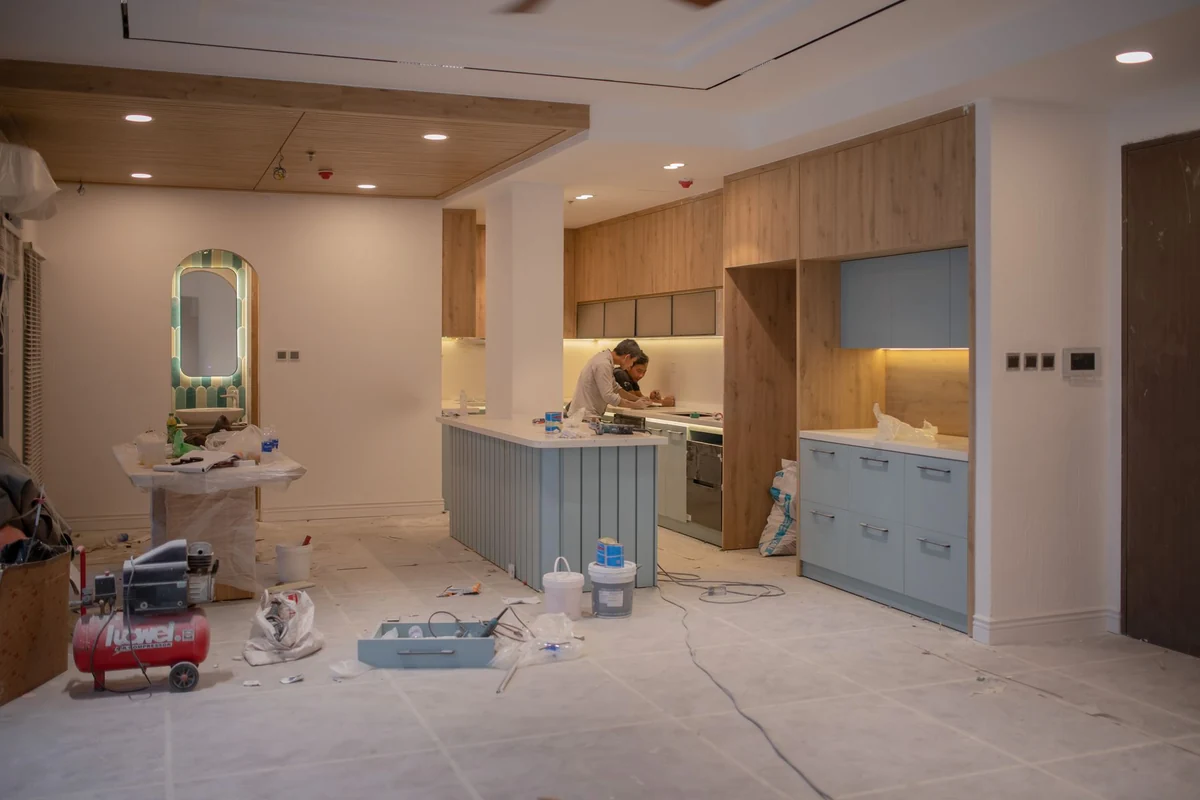
Planning a countertop installation for your San Diego kitchen or bathroom is one of those projects where the details make or break the outcome. Between choosing a material, understanding the fabrication timeline, and knowing what the installers will actually need from your space, there's a lot more to it than picking a pretty slab at the showroom. This guide walks through exactly what happens from measurement to final polish, so you know what to expect and what questions to ask your fabricator.
Whether you're replacing worn laminate with quartz, upgrading to natural granite, or specifying a waterfall-edge island in marble, the installation process follows a predictable sequence. Understanding it in advance helps you avoid the two most common headaches homeowners run into: scheduling surprises and seam placement they didn't expect.
How Countertop Installation Actually Works, Start to Finish
Most countertop installation projects move through four distinct stages: material selection, templating, fabrication, and install day. Skipping or rushing any one of these is where projects go sideways.
Step 1: Material Selection
Before anything gets measured, you'll choose your material and slab. Quartz (engineered stone) is resin-bound and non-porous, never needs sealing, and offers the most consistent pattern and color from slab to slab, with a Mohs hardness around 7. Granite, a natural stone, is porous and needs resealing roughly every 1-2 years, but it's naturally heat resistant and every slab has unique veining. If you're drawn to dramatic veining, marble delivers it, but it's soft (Mohs 3-4) and etches from acidic foods like lemon, vinegar, and wine even when properly sealed.
Step 2: Templating
Templating happens after cabinets are installed, using either a laser or a digital template system to capture exact dimensions, cutouts for sinks and cooktops, and edge specifications. This is a critical sequencing point: bring in your countertop installer too early, before cabinets are set and leveled, and you risk an inaccurate template that causes fitment problems later.
Choosing the Right Material for Your Project
Material choice drives everything downstream, including cost, maintenance, and how the fabricator handles seams and overhangs. If you've been comparing quartzite to engineered quartz because the names sound similar, know that they are genuinely different materials: quartzite is a natural stone that is very hard (Mohs 7) and heat resistant, but it IS porous and DOES require sealing like granite, unlike engineered quartz, which never needs sealing at all.
Key fact: Typical installed cost runs laminate $20-$50/sq ft, granite $40-$100/sq ft, quartz $50-$120/sq ft, marble $60-$150/sq ft, and quartzite $70-$150/sq ft, so material choice alone can swing your budget by thousands of dollars on an average kitchen.
Other Materials Worth Knowing
- Soapstone is naturally non-porous, softer and more scratch-prone, and darkens over time with mineral oil treatment; it's also very heat resistant.
- Butcher block / wood needs regular food-safe oiling, isn't heat resistant, but can be sanded and refinished when scratched or stained.
- Laminate is the most budget-friendly option, though it's not heat or scratch resistant and can't be repaired once damaged.
- Porcelain slab is a newer category, extremely hard and UV/heat resistant, typically 12-13mm thin, and a strong choice for outdoor kitchens.
Slab Thickness, Overhangs, and Support
Two structural decisions affect both the look and the durability of your countertop installation: slab thickness and overhang support. Standard slab thickness is 2cm (3/4") or 3cm (1 1/4"). The thinner 2cm option requires a plywood substrate and edge buildup to look substantial, while 3cm is self-supporting and remains the most common choice for US residential kitchens.
If you're planning a breakfast bar or peninsula with unsupported overhang, pay close attention to engineering limits. Overhangs beyond roughly 10-12 inches unsupported typically need corbels or steel support brackets, though the exact limit depends on the material and your fabricator's specific engineering specs. Don't let a contractor skip this step just to keep the design clean; an unsupported overhang that's too long can crack under weight over time.
Seams, Edges, and Design Decisions That Matter
Homeowners are often surprised to learn that seams aren't a sign of a bad fabricator, they're usually unavoidable. Most slabs top out around 9-10 feet in length, so seams are generally unavoidable on larger kitchen islands and runs. Seam placement is a real design decision, not just a fabrication afterthought, so ask your fabricator to show you exactly where seams will fall on your layout before fabrication begins, not after.
Edge Profile Options
Edge profiles shape both the look and the feel of your countertop installation. The most requested styles are eased, bullnose, ogee, and mitered waterfall edges, where the slab wraps down to the floor for a dramatic, seamless look on an island. Waterfall edges use significantly more material and require precise mitered seams, so they typically add to both material and labor costs.
Pro tip: Walk through the seam and edge layout with your fabricator using the actual digital template, not just a verbal description. A five-minute review at this stage can save you from an unwanted seam running right through your primary work zone.
What to Expect from Templating Through Install Day
Once your material is selected and the template is complete, fabrication begins. Typical fabrication-to-install turnaround is 1-3 weeks, depending on the fabricator's shop schedule, the complexity of cutouts, and whether the material is in stock or needs to be ordered from a distributor. This is the window most homeowners underestimate when planning a kitchen remodel timeline, so build it into your schedule early rather than assuming install can happen the same week as your template appointment.
On install day, the fabrication team will bring the finished slab pieces to your home, set them onto the cabinets, secure seams if applicable, and complete any final polish or caulking work. Sinks, cooktops, and any specified cutouts will already be cut at the shop based on your template, so install day itself is typically a matter of hours, not days, for a standard kitchen.
A Note on Heat Resistance
Quartz is not fully heatproof despite marketing claims, the resin binder can discolor or crack under direct hot cookware, so trivets are still recommended even with an engineered quartz countertop installation. This is a common point of confusion for homeowners who assume "quartz" means indestructible; it's durable, but not invincible.
Local Considerations for San Diego Installations
If your countertop installation includes an outdoor kitchen or covered patio, material choice matters even more here in San Diego. Quartz's resin binder can UV-fade or discolor outdoors over time, so granite, quartzite, and porcelain slab are the more climate-appropriate choices for exterior installations in our sun-heavy environment. Fabricators familiar with San Diego's outdoor living trends will typically steer you toward these materials by default for any patio, pool deck, or outdoor kitchen project.
Pro tip: If you're combining an indoor kitchen remodel with an outdoor kitchen build, consider using a heat- and UV-stable material like granite or porcelain slab outdoors even if you choose quartz indoors. It avoids premature discoloration without forcing your entire home to match one material.
Common Countertop Installation Mistakes to Avoid
Even experienced homeowners run into avoidable problems during a countertop installation. Knowing where projects typically go wrong helps you ask the right questions before fabrication starts, not after the slab is already cut.
Measuring Before Cabinets Are Final
The single most common mistake is allowing templating to happen before cabinets are fully installed and leveled. Since templating happens after cabinets are installed, any adjustment to cabinet placement after the template is taken can throw off cutout alignment for sinks and cooktops, sometimes requiring a costly re-template.
Underestimating the Fabrication Window
Homeowners planning a full kitchen remodel often schedule flooring, painting, and appliance delivery without accounting for the countertop installation's 1-3 week fabrication-to-install turnaround. Build this window into your project timeline from day one rather than discovering it mid-remodel, when other trades are already scheduled around a countertop that isn't ready.
Choosing Material Based on Showroom Lighting Alone
A slab that looks perfect under a showroom's bright, even lighting can read very differently under your kitchen's warmer under-cabinet lighting or natural window light. Whenever possible, ask to view a full slab (not just a sample chip) under lighting conditions similar to your home, and if you're choosing between materials like granite and quartz, request to see the exact slab that will be cut, not a similar one, since granite's veining is unique per slab.
Ignoring Sealing Requirements
Porous natural stones need a maintenance plan from day one. Granite needs resealing roughly every 1-2 years, and quartzite requires sealing just like granite despite its quartz-sounding name. Skipping this step, or assuming your fabricator's initial factory sealant lasts forever, is one of the most common reasons natural stone countertops stain prematurely.
Key fact: Marble is both porous and relatively soft at Mohs 3-4, and it etches from acidic foods like lemon, vinegar, and wine even when properly sealed, sealing prevents staining but does not prevent etching, which is a chemical reaction, not a moisture issue.
Countertop Installation Costs: What Drives the Price
Beyond the base material cost, several factors influence your total countertop installation price. Slab thickness matters: a 3cm slab uses more material than 2cm and is priced accordingly, even though it doesn't require the plywood substrate that thinner slabs need. Edge profile complexity also adds cost, with a simple eased edge priced lowest and a mitered waterfall edge, which uses substantially more material and skilled labor to execute a clean seam down to the floor, priced highest.
Cutout complexity is another factor fabricators account for: a straightforward single sink cutout costs less than a layout with an integrated cooktop, apron-front sink, and multiple faucet holes. If your project includes a large island where seams are unavoidable due to standard 9-10 foot slab lengths, expect your fabricator to factor seam finishing and polishing into the quote as well.
Hiring the Right Fabricator
Not every countertop installer offers the same level of precision, and this is a project where experience really shows. Ask potential fabricators how they template (laser vs. digital), how they handle seam placement on larger runs, and what their typical fabrication-to-install turnaround looks like given your material choice. A fabricator who walks you through overhang support requirements and edge profile options proactively, rather than waiting for you to ask, is generally a strong signal of quality workmanship.
It's also worth asking to see examples of their waterfall edge or mitered seam work if that's part of your design, since these details separate an average installation from an exceptional one.
Summary: Planning Your Countertop Installation
A successful countertop installation comes down to sequencing and communication: choose your material with your actual use case in mind (indoor vs. outdoor, budget, maintenance tolerance), make sure templating happens only after cabinets are fully set, plan for a realistic 1-3 week fabrication window, and review seam and edge layout before fabrication locks in. Whether you're installing quartz in a busy family kitchen or granite on a sun-exposed San Diego patio, understanding this process up front is what turns a stressful remodel into a smooth one. When you're ready to move forward, a reputable local fabricator can walk you through templating, material samples, and a realistic install timeline tailored to your project. Our page on countertop installation in San Diego, CA covers what our crew handles from templating to install day.